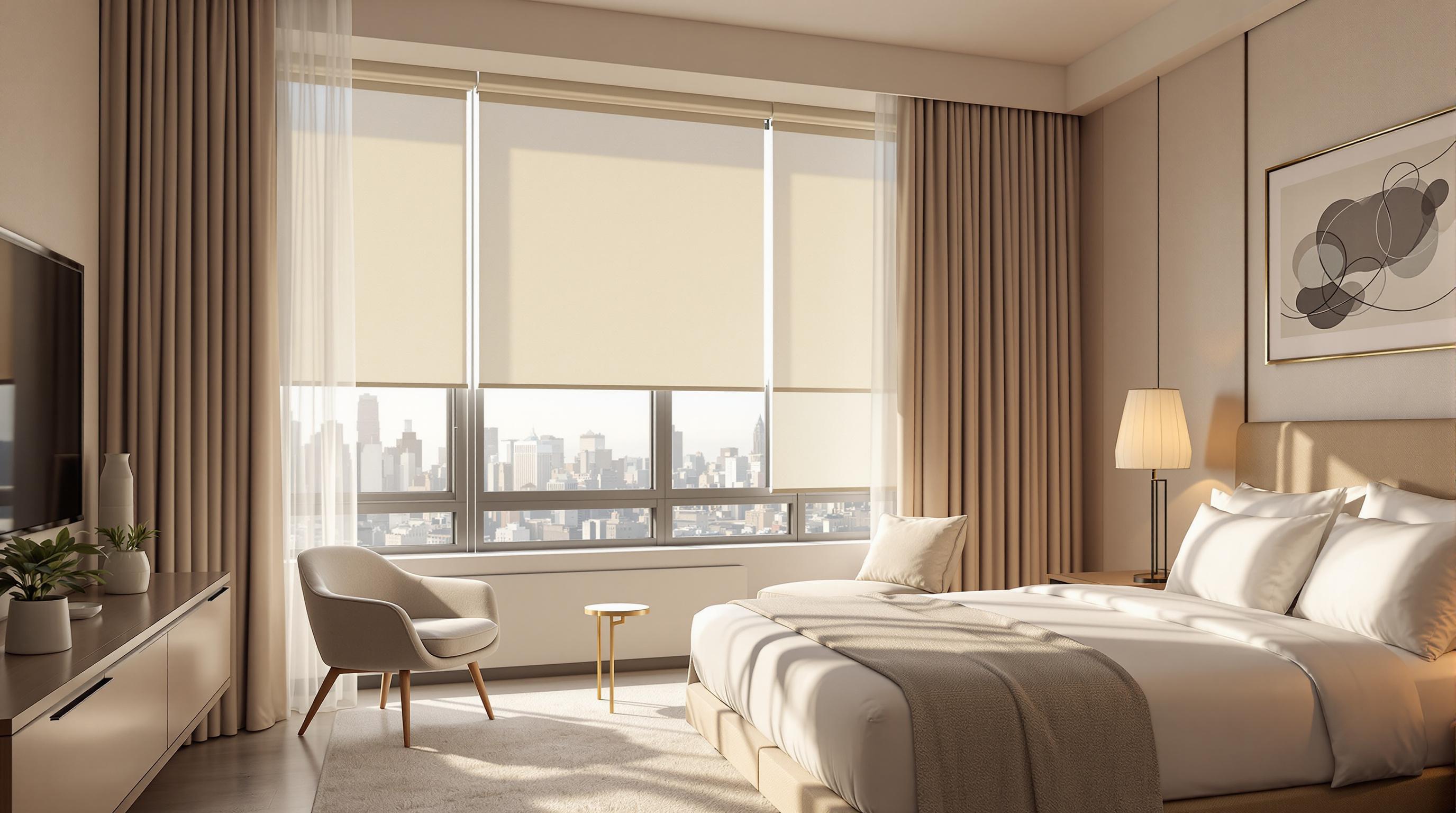
Smart Window Shades in Hotels: Benefits for Guests
Smart window shades are transforming hotel stays by offering convenience, energy savings, and improved guest comfort. Unlike manual shades, these can be controlled with apps, voice commands, or automated schedules. Key benefits include:
- Energy Efficiency: Cuts utility bills by up to 30% and optimizes room temperature with HVAC integration.
- Guest Comfort: Provides precise light and privacy control, easy operation, and personalized settings like “Sleep Mode” or “Movie Mode.”
- Operational Ease: Reduces maintenance, speeds up room turnover, and allows centralized staff control.
Quick Comparison
| Feature | Manual Shades | Smart Shades |
|---|---|---|
| Operation Method | Pull cords or chains | Apps, voice, or panels |
| Energy Efficiency | Limited | Advanced thermal control |
| Privacy Control | Manual adjustments | Automated scheduling |
| Maintenance Needs | Frequent repairs | Minimal, mostly software |
| Guest Control | Basic manual | Customizable presets |
| Staff Efficiency | Room-by-room changes | Centralized management |
Smart shades streamline hotel operations, enhance guest satisfaction, and align with energy-saving goals. They’re a practical upgrade for modern hospitality.
Related video from YouTube
Current Limitations of Manual Window Shades
Manual window shades often fall short when it comes to meeting modern guest expectations for comfort and convenience. They also create inefficiencies for hotel operations, impacting both guest satisfaction and management workflows.
Guest Comfort Issues
For many guests, manual shades can be frustrating to use. Pull cords may be hard to reach or confusing, especially for those with limited mobility. Guests often need to get out of bed to adjust the shades, which can disrupt sleep – especially in the early morning.
Uncontrolled sunlight can make rooms uncomfortably warm, while privacy becomes a concern if shades are left open after dark. This is especially true in urban hotels where rooms face busy streets or neighboring buildings. Even when closed, these shades often let in unwanted light through gaps, further reducing comfort.
Challenges for Hotel Management
The drawbacks of manual shades go beyond guest inconvenience – they also create operational headaches for hotel staff:
- Constant use leads to wear and tear, requiring frequent repairs and extra cleaning.
- Poor insulation from manual shades increases energy use, driving up HVAC costs and putting extra strain on equipment.
- Housekeeping teams spend additional time adjusting shades during room preparation, slowing down room turnovers during busy periods.
Without automation, hotels miss out on opportunities to optimize energy use. Rooms lack consistent insulation throughout the day, leading to higher HVAC reliance in both summer and winter. These inefficiencies impact not only energy costs but also the workload of staff, creating delays and potential oversights during peak times.
These limitations make it clear that a more advanced solution is needed to improve both guest experience and operational efficiency.
Smart Window Shade Features
Smart window shades eliminate the hassle of manual adjustments by automating controls for guests and simplifying hotel operations. These systems are a major step up from traditional manual shades, transforming how guests interact with their rooms.
Core Functions
Modern smart shades offer features designed to improve the guest experience:
- Automated Scheduling: Shades adjust on their own based on the time of day, sunrise/sunset, or whether the room is occupied.
- Remote Control: Guests can manage shades using mobile apps, voice assistants, or bedside panels.
- Light Sensors: Built-in sensors detect ambient light and adjust the shades to maintain ideal brightness levels.
- Temperature Control: Integrated with thermostats, these shades manage sunlight to help maintain a comfortable room temperature.
- Centralized Control: Hotel staff can adjust shades across multiple rooms from a central system.
These features address common issues with manual shades, offering a more seamless experience.
Manual vs. Smart Shades Comparison
Here’s a breakdown of how traditional shades stack up against smart systems:
| Feature | Manual Shades | Smart Shades |
|---|---|---|
| Operation Method | Pull cords or chains | Mobile apps, voice commands, wall panels |
| Privacy Control | Requires manual adjustments | Automated settings with scheduling options |
| Energy Efficiency | Limited insulation capabilities | Advanced thermal control with HVAC integration |
| Maintenance Needs | Frequent cord or mechanism repairs | Mainly software updates, minimal mechanical wear |
| Guest Control | Basic manual operation | Customizable presets and multiple control options |
| Staff Efficiency | Room-by-room adjustments | Centralized management for multiple rooms |
| Light Management | Fixed positions | Gradual adjustments using light sensors |
| Integration Capability | None | Compatible with room management systems |
This comparison highlights how smart shades improve comfort for guests, simplify tasks for staff, and reduce energy use by working seamlessly with other room systems.
sbb-itb-cecc65e
Guest Advantages
Smart shades bring more than just technical perks – they directly improve guest comfort and convenience in practical ways. Here’s how these features translate into everyday benefits for guests.
Light and Privacy Controls
Smart shades give guests precise control over natural light and privacy. They can simulate a sunrise to make waking up easier and ensure complete privacy at night.
Guests can also set up personalized lighting scenes for various activities:
- Movie Mode: Shades lower to 80% for an ideal TV-viewing experience while keeping some natural light.
- Sleep Mode: Full blackout for uninterrupted rest.
- Work Mode: Partial shade adjustment to reduce screen glare while maintaining daylight.
- Relaxation Mode: Soft, filtered light for reading or lounging comfortably.
Room Temperature Management
When connected to the HVAC system, smart shades help maintain a comfortable room temperature. In the summer, they block direct sunlight to reduce cooling needs. During winter, they open to let in natural warmth during sunny hours.
These features provide:
- Consistent Comfort: Keeps the room temperature steady while allowing guests to adjust it to their liking.
- Seasonal Adjustments: Automatically adapts settings based on weather and sun patterns.
Simple Control Options
Modern smart shade systems make operation effortless, offering multiple control methods to suit guest preferences:
| Method | Key Functions | Advantages |
|---|---|---|
| Mobile App | Scheduling, scene creation, remote access | Control from anywhere in the room |
| Voice Commands | Basic operations, scene activation | Hands-free convenience |
| Bedside Panel | Quick presets, manual adjustments | Easy-to-use tactile control |
| Motion Sensors | Automatic operation based on occupancy | Saves energy when the room is unoccupied |
The user-friendly interface ensures guests don’t need technical know-how to operate the system. Many hotels provide a quick-start guide through a mobile app or in-room tablet, so guests can start personalizing their environment as soon as they arrive.
Energy Efficiency Impact
Smart shades not only enhance guest comfort but also help reduce energy costs by automating light and temperature control. These systems are designed to support cost reduction efforts while aligning with eco-friendly goals.
Automated Energy Savings
Smart shades work with building management systems to manage energy use throughout the day. They adjust based on factors like room occupancy, sunlight, time of day, and outdoor temperature. For instance, in empty rooms, shades close automatically to lower heating and cooling needs. They also use real-time sunlight adjustments to let in natural light, cutting down on the need for manual changes.
Lower Energy Consumption
Beyond automation, smart shades help reduce energy use by creating an optimized indoor environment. They regulate room temperatures and minimize the need for artificial lighting through constant, subtle adjustments. This ensures guests remain comfortable while energy use stays efficient. Their smooth operation across all rooms makes them easy to implement on a large scale.
Setup and Management Guide
To make the most of smart window shades, proper setup and management are essential. This involves understanding costs, system requirements, and staff training to ensure a smooth rollout.
Cost Analysis
The cost of smart window shades depends on the size of the hotel and the features chosen. Expenses typically include hardware, system integration, and maintenance. It’s also important to weigh these costs against potential energy savings and the long-term financial benefits these upgrades can offer.
System Setup and Training
Successful implementation requires collaboration across various hotel departments. Key steps include:
- Technical Infrastructure
- Ensure compatibility with current systems
- Check WiFi coverage throughout the property
- Confirm access to a 120V AC power supply
- Install backup systems for reliability
- Staff Training
- Educate front desk, maintenance, and housekeeping teams on operating procedures and troubleshooting methods
- Guest Interface Setup
- Configure in-room control panels, mobile apps, and voice command systems to create a seamless guest experience
This coordinated approach improves operations and enhances the overall guest experience.
Switch Hotel Solutions: Smart Technology Support

Hotels in Australia and New Zealand can benefit from the expertise of Switch Hotel Solutions. They specialize in implementing smart technology and offer services such as:
- Evaluating infrastructure compatibility
- Designing staff training programs
- Establishing operating procedures
- Tracking system performance and return on investment
With a fixed-fee pricing model, they provide clear, predictable costs while tailoring solutions to meet each hotel’s specific needs. Their support ensures a smoother transition to smart technology and helps maximize its benefits.
Conclusion
Smart window shades bring a new level of comfort for guests while helping businesses reduce energy expenses. As mentioned earlier, this technology isn’t just about convenience – it’s also about cutting costs.
These shades fit perfectly with today’s hospitality trends by combining modern design with automation, offering both style and easy control [1][2].
Industry professionals highlight these advantages:
“Innovative Mecho shade solutions provide the optimal light and ideal comfort zones for guests while their energy efficiency and seamless integration offers significant cost-savings to owners of hotels, condominiums, conference centers, health clubs, and other hospitality amenities worldwide.”
- Mechoshade.com [1]
In addition, these systems help preserve interior furnishings by blocking harmful UV rays and ensuring better temperature control in rooms [2].
The post Smart Window Shades in Hotels: Benefits for Guests first appeared on Switch Hotel Solutions.